Styles, Colors and Sizes
Start with the pairs needed for each style and color, then define the size breakdown. Combining several styles in one order does not automatically satisfy each style’s minimum.

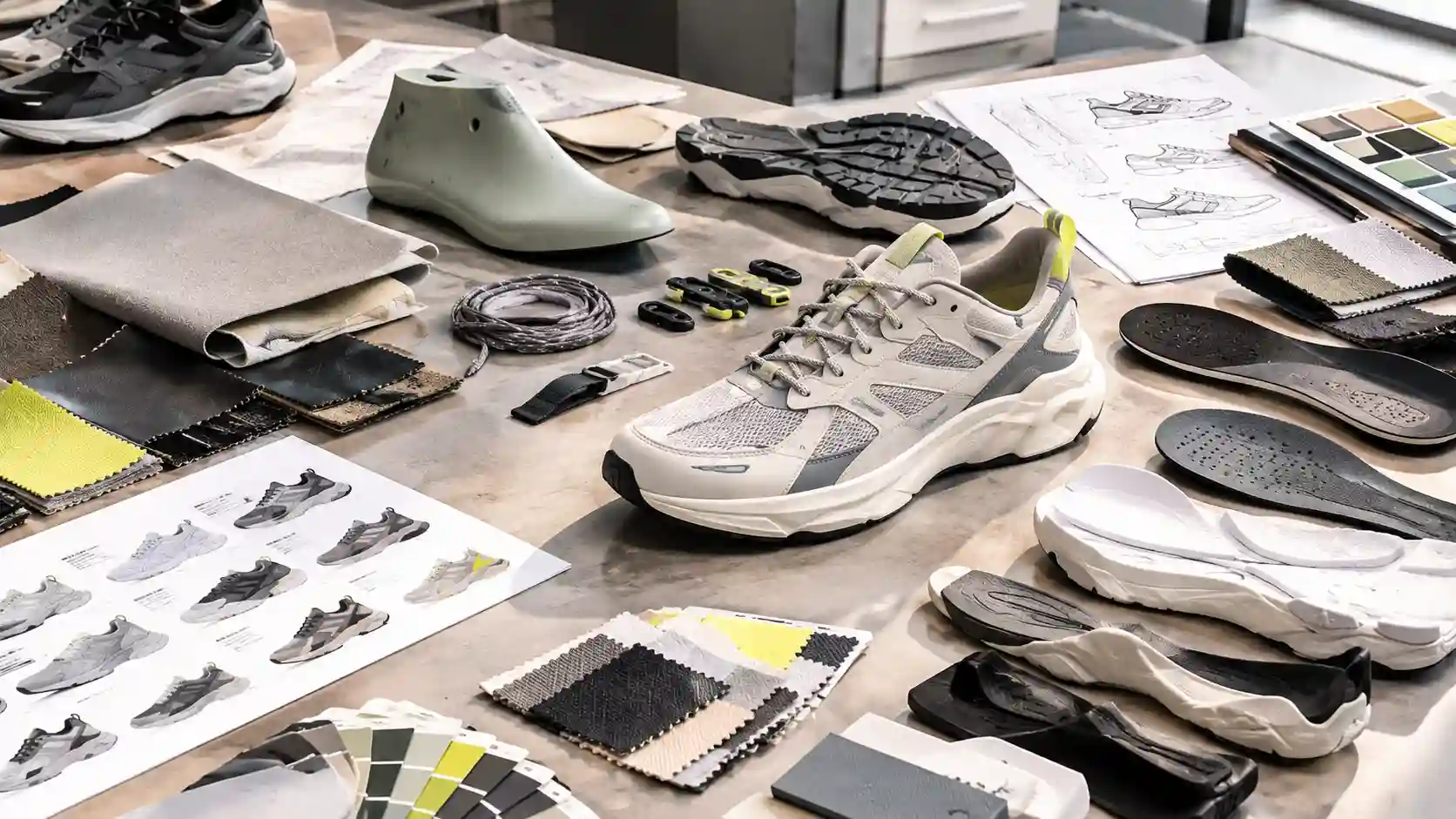
Minimum order quantity is not one factory-wide figure. It is the result of material minimums, component economics, color splits, size curves, line setup and the amount of customization required.
Project snapshot
Shoe manufacturing MOQ is not one universal factory number. It is usually constrained by outsole or last tooling, material purchase minimums, color setup, production efficiency and the size breakdown. The practical MOQ can only be estimated from the actual style.
Shoe manufacturing MOQ
Minimum order quantity, or MOQ, is the smallest production quantity a supplier accepts under the quoted conditions. For footwear, it may apply to each style or color rather than the whole order. Shoetec helps buyers review these details alongside materials, customization and target cost.
Discuss Your Order QuantityStart with the pairs needed for each style and color, then define the size breakdown. Combining several styles in one order does not automatically satisfy each style’s minimum.
Custom-dyed uppers, branded components, soles and printed packaging can have separate supplier minimums. Available materials and existing components may offer more flexibility, subject to confirmation.
Compare feasible order quantities against both the price per pair and the total purchase commitment. Include sample charges, tooling, packaging and any unused custom materials when reviewing the budget.
A focused first range can reduce the number of separate minimums to meet. For repeat orders, material availability, component minimums, pricing and production timing need to be checked again.
There is no single MOQ for every footwear project. The applicable minimum, size breakdown, unit price and any material commitments are confirmed in the quotation for the selected style, color and customization scope.
Before we quote
A factory may accept a small assembly run while an outsole, woven label, special upper or custom box supplier requires more. Excess material cost still belongs to the program.
Custom colors, technical textiles, leather grades, foam, hardware and printed materials can each carry supplier-level quantities.
Cutting, color changes, mold setup, line changeover and operator learning make very small runs less efficient and less stable.
A total order can become many small lots when divided by style, color, gender, width, destination and packaging version.
Feasibility strategy
The most effective MOQ discussion is a design and assortment discussion. Removing a unique material or extra color may help more than asking for an arbitrary exception.
Why published MOQ numbers conflict
Shoetec’s current website contains references to both 500 and 800 pairs. Reconcile the published claim before launch; quote the feasible quantity for each project instead of repeating a universal number.
From brief to bulk
The current website publishes 800 pairs per style as a starting point in some service content; actual feasibility must be confirmed against the project specification.
List styles, colors, sizes, widths, destinations and packaging variants rather than only the grand total.
Mark new colors, materials, soles, lasts, molds, hardware, labels and printed components.
Confirm purchase minimum, usable yield, lead time and excess handling for critical materials.
Assess line, process, construction and quality risks created by the proposed lot size.
Compare range consolidation, stocked components, carryover materials or adjusted color plans.
Record MOQ basis, order breakdown, excess-material terms and assumptions with price and timing.
Questions buyers ask
The site currently publishes 800 pairs per style as a starting reference in service content, while another existing page mentions 500 pairs. Reconcile these statements before publication and confirm every project by style, color, material and construction.
Sometimes, but each color may trigger separate material, sole or production constraints. The split must be evaluated rather than assumed.
Often it can avoid new tooling and some material development, but branding, color and packaging minimums still apply.
A surcharge may cover inefficiency or excess material, but it cannot always solve supplier minimums, unstable processes or unavailable components.
Send the style count, colors, size range, customization, materials and target quantity. We can identify the constraints and practical simplification options.