Product and Construction Fit
The factory should have relevant experience with the proposed footwear category, upper construction, sole-attachment method and level of product complexity.

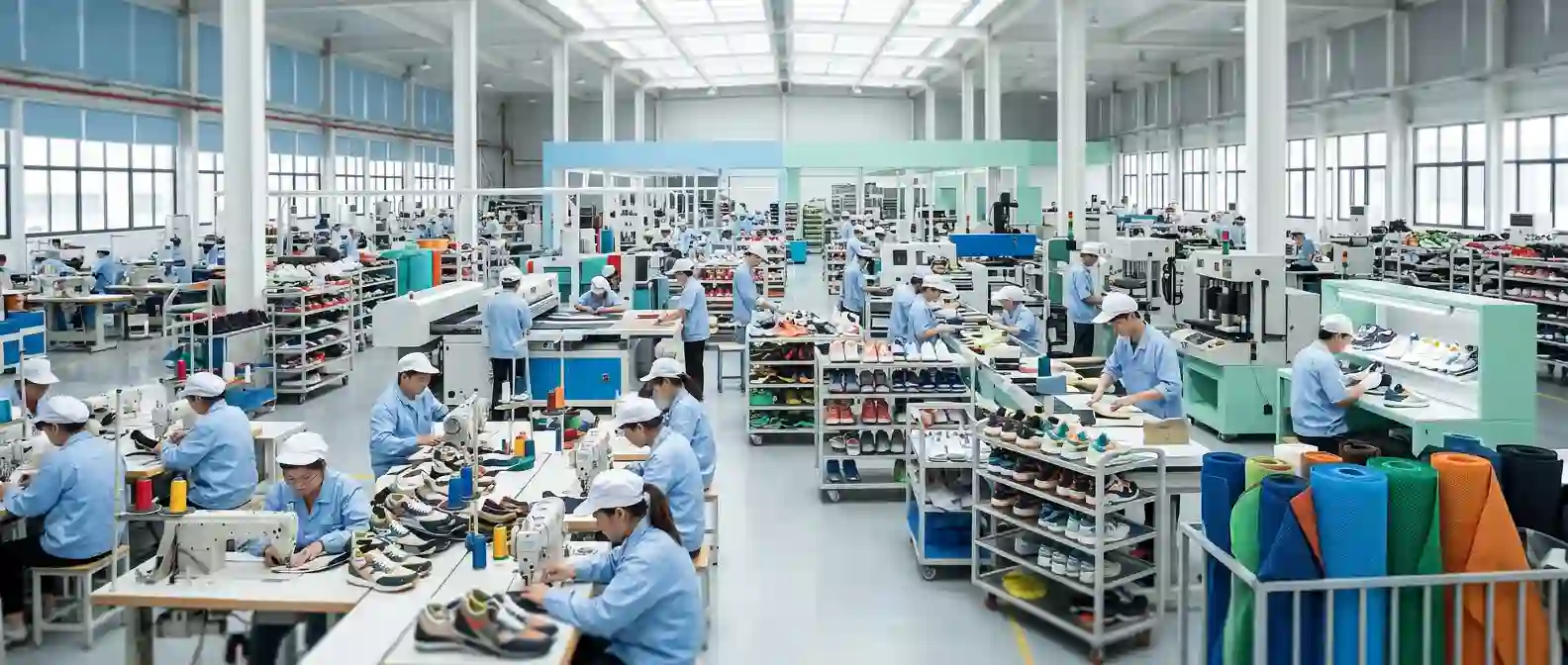
Different footwear categories require different materials, equipment, construction methods and production experience. Shoetec evaluates the requirements of each project before recommending a suitable factory and development route.
Scope in one minute
Shoetec works through a coordinated footwear supply network. Capability must therefore be verified at the factory allocated to the style: comparable construction, actual processes, available capacity, quality records and disclosed subcontracting.
Factory capability matching
Factory capability is not defined by size alone. Shoetec considers the footwear category, construction, materials, equipment, workforce experience and order requirements when evaluating a suitable production route.
Discuss Your Production RequirementsThe factory should have relevant experience with the proposed footwear category, upper construction, sole-attachment method and level of product complexity.
Last development, pattern engineering, sample making, sole tooling and material sourcing needs are considered according to the selected OEM, ODM or custom development route.
Available production lines, technical staff, process controls and inspection arrangements are reviewed in relation to the style, quantity and required delivery period.
Testing, labeling, material documentation and other destination-market requirements are identified for the specific product before the production plan is finalized.
Factory allocation, available capacity, footwear manufacturing MOQ, tooling scope, testing support and lead time are confirmed for each style and order period. Product-specific requirements should be reviewed before sampling or bulk production begins.
Details that matter
Equipment and headcount alone do not prove category competence. Patterns, lasting, sole attachment, material handling and quality knowledge must fit the intended product.
Review pattern engineering, last and sole coordination, sample-room experience, material trials and revision control.
Confirm cutting, stitching, lasting, cementing, vulcanizing, molding or other required processes at the allocated site.
Assess incoming, inline and final control, test access, calibration, record retention and corrective-action practice.
Published capability context
Shoetec's current public content states operation since 2005, a network of more than 20 cooperating factories and annual capacity of 1.5 million pairs.
Network figures are not site-level proof
The website currently refers to operation since 2005, more than 20 cooperating factories and annual capacity of 1.5 million pairs. Publish those figures only when dated evidence and scope are available.
Working sequence
Capability review should proceed from the product requirement to the production site and control system.
List processes, equipment, skills, materials, tests and tolerances required by the shoe.
Shortlist sites with relevant category history, order fit, compliance profile and available timing.
Examine business identity, audits, process records, equipment, quality procedures and disclosed subcontracting.
Use prototypes and production-like trials to verify that capability translates into the proposed construction.
Review material readiness, line allocation, workforce assumptions and competing orders for the delivery period.
Monitor actual production location, processes, quality events and changes throughout the order.
Practical FAQs
Current website content describes a coordinated network model. The specific legal, contracting and production entities should be disclosed for each project.
The current published claim is 1.5 million pairs annually. Buyers should request the calculation period, network scope and project-specific available capacity.
No. Category and construction capability varies. Allocation should be based on comparable processes, quality controls, compliance and order profile.
Audit or visit arrangements can be discussed subject to access, confidentiality, timing and the factory's policies. Scope should be agreed in advance.
Send the category, construction, volume, market, quality and timing requirements. Shoetec can identify the capability evidence relevant to factory allocation.