Hazard profile
Identify impact, compression, puncture, slip, water, oil, static or other relevant workplace conditions.

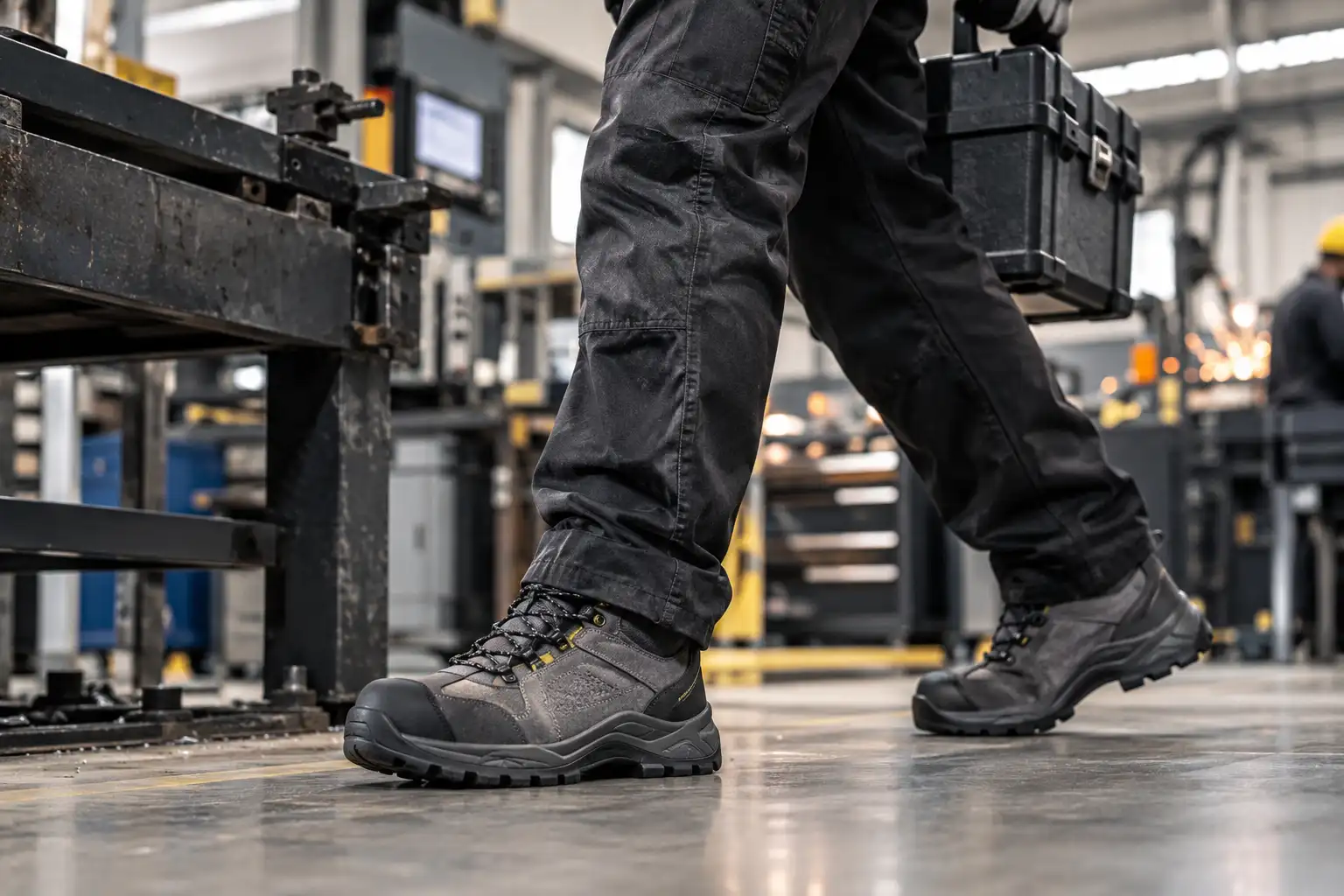
A workwear range must connect workplace hazards, market standards, worker comfort and repeatable production. Shoetec helps organize the protection matrix before individual styles are developed.
Buyer’s view
A work-shoe program begins with the hazard and destination market. Protective toe, puncture resistance, slip performance, electrical properties and labeling must be mapped by SKU before components and tests are selected.
Inputs that change the answer
A distributor may need several protection classes, but not every wearer needs every feature. A clear matrix supports sellability, cost control and compliance communication.
Identify impact, compression, puncture, slip, water, oil, static or other relevant workplace conditions.
Consider shift length, surface, temperature, weight, flex, width, entry method and fit consistency.
Specify market, standard, classification, test samples, certification holder and ongoing documentation obligations.
Decision path
The workflow aligns product architecture, evidence and commercial assortment before bulk commitments.
Document destination, industries, standards, wearer needs and intended protection classifications.
Assign boot heights, toe options, puncture systems, outsoles and price points to specific use cases.
Confirm protective elements, suppliers, documentation and compatibility with the proposed construction.
Evaluate toe-room, flex, weight distribution, heel hold, closure and underfoot comfort.
Use the required product version and responsible laboratory or certification route for the market.
Maintain component traceability, critical process checks, inspection and document retention.
Protection with usability
Protective components change weight, flexibility, thermal behavior and fit. Comfort cannot be treated as decoration after compliance decisions are made.
Compliance cannot be added at the end
Do not treat one passing report as approval for every color, material or construction. Check exactly which model and components the report covers.
Footwear for workwear brands
Work shoes and safety footwear must be developed around the user, workplace conditions and applicable market requirements. Shoetec helps buyers coordinate product specifications, protective features, comfort priorities and manufacturing considerations.
Discuss Your Work Footwear ProjectThe job role, working surface, climate, shift length and identified workplace risks help define the appropriate footwear category and product priorities.
Depending on the project, development may consider protective toes, penetration-resistant components, outsole properties, ankle support and upper durability.
Last shape, size grading, internal space, cushioning, flexibility, weight and moisture management can influence comfort during extended periods of wear.
Applicable standards, test methods, labeling and documentation should be identified for the specific product and destination market before production approval.
Protective features, testing scope and compliance requirements vary by product design, intended workplace and sales market. Certification applies only to the specific model and construction evaluated by the relevant testing or certification body.
Before you proceed
That depends on destination market, industry, claims and product class. Buyers should confirm legal requirements with qualified compliance advisers.
Certification is product- and scope-specific. Request documents for the exact model and confirm holder, validity and applicability before making claims.
Yes, but fit, weight, thermal behavior, metal detection, cost and test implications should be evaluated separately.
Use consistent fit criteria, representative wearers, relevant shift simulations and measurable construction details rather than subjective sample impressions alone.
Share the destination markets, industries, hazards, required standards, target quantities and price structure. We can help organize the product and evidence questions for the range.