Underfoot system
Select lug geometry, rubber or compound, cushioning, torsional support and flex for the intended terrain and pace.

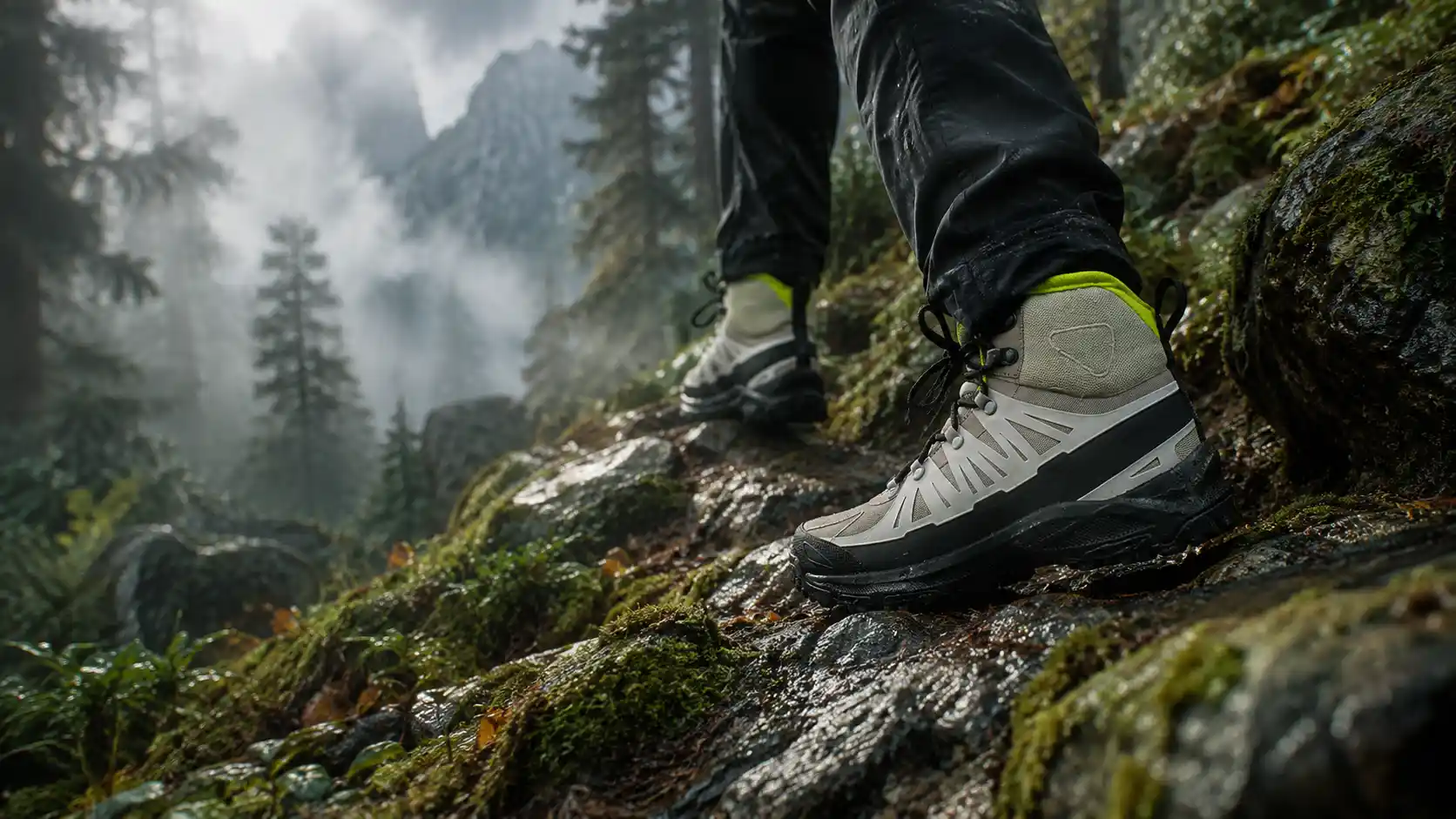
Hiking, trekking and trail products must balance terrain, weather, durability, weight and comfort. Shoetec helps outdoor teams convert that use-case hierarchy into materials, construction, testing and production controls.
Straight answer
Outdoor footwear development starts with terrain, climate, duration of use and the wearer’s load—not with a list of fashionable features. Shoetec then aligns traction, weather management, support, weight and durability with a manufacturable construction.
What we need to know
Outsole geometry, compound, upper support, membrane construction and fit interact. Optimizing one element without the others may reduce real-world performance.
Select lug geometry, rubber or compound, cushioning, torsional support and flex for the intended terrain and pace.
Balance abrasion zones, structure, toe protection, breathability and weight according to use conditions.
Define water resistance, waterproof construction, insulation or ventilation with realistic care and test expectations.
How the work is handled
The process retains collection coherence while allowing each product to meet its own terrain and consumer brief.
Define terrain, weather, duration, load, pace, consumer skill and channel for each range position.
Match lasts, soles and constructions to the performance hierarchy and expected order profile.
Choose upper, lining, reinforcement, foam, plate and outsole options with availability and testability in mind.
Assess fit, flex, heel hold, traction feel, protection, water management and durability risks.
Confirm which laboratory or field evidence supports product statements in the target market.
Control bonding preparation, waterproof details, component identity and category-specific workmanship.
Category judgment
Terms such as durable, grippy and waterproof are not specifications. They need a target environment, method and acceptance threshold.
A waterproof label is not a product specification
Membrane choice alone does not determine water resistance. Pattern lines, seams, tongue construction, lasting and quality control all affect the result.
Footwear for outdoor brands
Hiking shoes, trail footwear and outdoor boots require different combinations of grip, protection, support, comfort and weather resistance. Shoetec helps translate the intended activity into practical product and manufacturing requirements.
Discuss Your Outdoor Footwear ProjectTrail type, walking distance, climate, load and expected consumer use help determine the appropriate footwear structure and performance priorities.
Material selection can consider breathability, abrasion zones, toe and heel protection, collar support, lining comfort and the required level of weather resistance.
Lug layout, rubber compound, flex, cushioning and support should be selected according to the target surface and intended activity rather than appearance alone.
Sample fitting, relevant functional checks and controlled wear feedback can be used to refine comfort, sizing and construction before production.
Outdoor footwear specifications and performance claims should be defined for the intended use and target market. Materials, construction, testing scope, minimum order quantity and development time are confirmed for each project.
Common commercial questions
Sometimes, but the ideal geometry, cushioning, stability and weight can differ. The shared-platform decision should follow the two product briefs.
No. Seam sealing, bootie construction, gusset design, lasting and production workmanship also affect whole-shoe performance.
Describe terrain, wet or dry condition, temperature and user activity, then select applicable laboratory or field evaluation rather than relying on a generic claim.
Potentially, subject to availability, performance, traceability, certification scope and order requirements. Claims must match verifiable documentation.
Send the terrain, climate, user, channel, target price and must-have performance priorities for each style. We can review the appropriate development and validation path.