
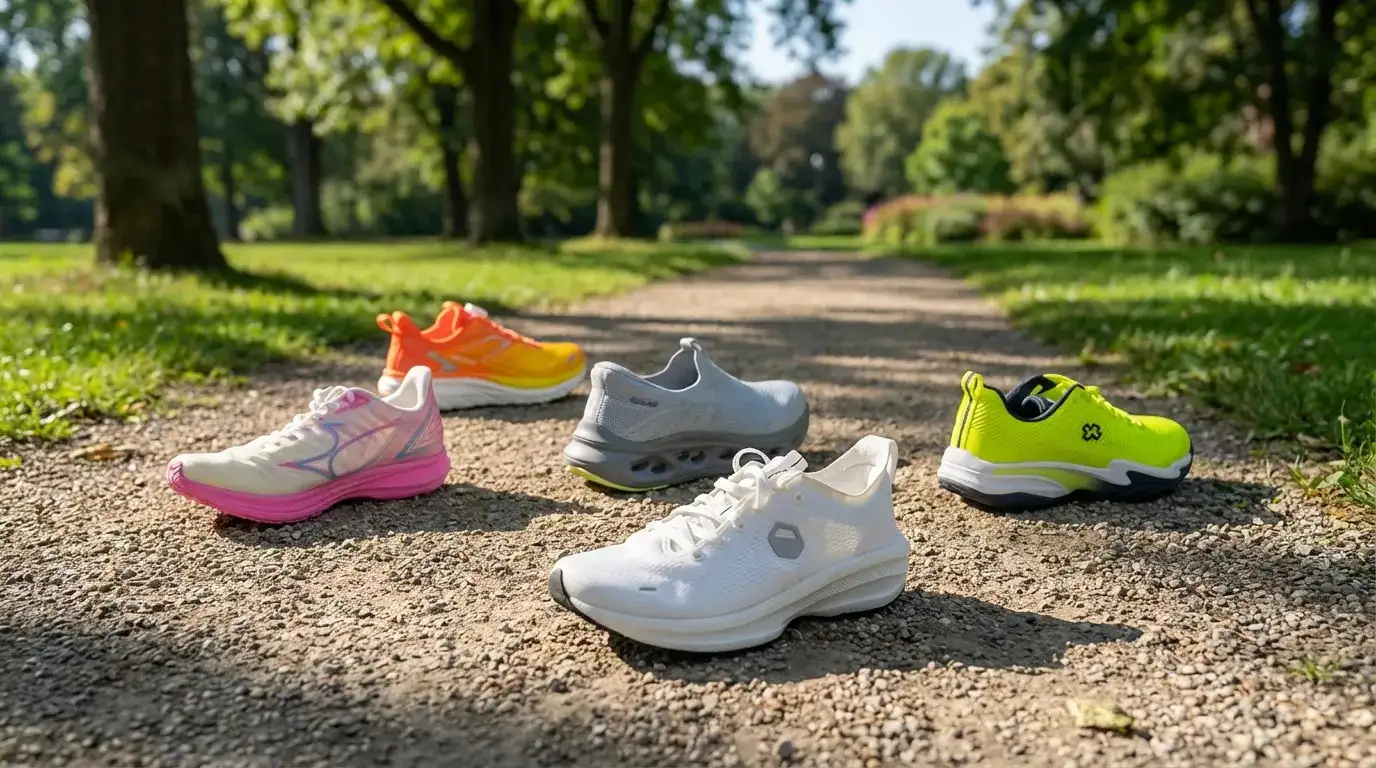
Tennis Shoe Factory – Lateral Support & Herringbone Outsole
OEM and ODM production for court shoes — clay and hard-court outsoles, reinforced uppers, private label branding, MOQ 800 pairs
Court Shoe Builds, Sample to Container
OEM & Custom Design Flexibility
Materials, cushioning and outsole are all open to spec. Pick a herringbone or modified tread for clay or hard court, set the midsole density, and we build the sample to match.
Private Label Tennis Sneakers
Shoetec runs private label production from design and sampling through to packaging and shipping, so the shoe arrives wearing your tongue label, insole print and box.
QC & Durability Testing
Outsole abrasion, bonding strength, stitch density and colour fastness are tested before bulk, then checked again on the finished cartons at an AQL 2.5 final inspection.
Tennis shoes live or die on lateral movement. We build uppers that hold the foot through a slide, outsoles that grip without dragging, and a midsole tuned for shock absorption. That is how a court shoe earns repeat buyers.

Tennis Shoe Manufacturers, Court-Ready Builds
We build tennis footwear around grip, lateral hold and a cushioned base, so a player can cut and plant on clay or hard court without the shoe rolling.

Custom Tennis Shoes, Idea to Production
Work with our design and engineering team to turn a sketch into custom tennis shoes — your own last, upper layout, colourway and fit for the niche you sell to.

Private Label Tennis Sneakers
From first sketch to the printed box, our private label service lets a brand launch a court collection that carries its own name and story, not a generic white-label pair.

Court Shoe Supplier, Runs That Scale
From a 800-pair trial to a full container, we keep the same QC standard and the same ship-date discipline, so your larger orders do not drift.

Built for Every Match
Light uppers, breathable mesh and a cushioned sole are spec'd per model — enough support to last a three-set match without weighing the player down.

Independent QC for Court Endurance
Every pair is checked for traction, fit and durability before it is cartoned, so what reaches your warehouse holds up through a full season of play.
Nine Production Stages Behind Every Shoetec Gym Shoe
Trading footwear since 2005 · Partner factories in GD, ZJ and FJ · Custom ODM and OEM programs for brands and wholesalers

Shoetec Partner Factories
Partner plants in Fujian, Guangdong and Zhejiang handle runs from 800 to 100,000 pairs. Every order gets an in-line QC pass before it leaves the floor.

Material Purchasing
Mesh, knit, foam, rubber and adhesives are bought against OEKO-TEX and GRS certificates. Material pricing is quoted line by line, with no hidden mark-up.

Shoe Design
Our designers work from your brief or build a range from scratch, then hand over tech packs with measurements, colours and construction notes.

Cutting
Dies are cut to the last measurement so panels line up across sizes. Offcuts are re-sorted for sampling, which trims waste and keeps unit cost down.

Stitching
Uppers are sewn at 12 stitches per centimetre, with reinforced bars at the flex points. In-line inspectors check seams every 50 pairs.

Bottom Attaching
Soles are cold-pressed or vulcanised to the upper, then tested for bond strength. Outsole compounds meet EN and ASTM anti-slip requirements.

Lasting Operation
Uppers are lasted to a snug, even fit and checked against EU, UK, US and CM sizing charts before the outsole goes on.

Packing
Shoeboxes, polybags, hangtags and labels carry your branding, packed to EU and Middle East customs rules. Cartons are drop-tested before shipping.

Logistics & Distribution
We ship FOB Xiamen or arrange door-to-door DDP, with tracking from the loading dock. Sea freight to the EU runs 25–35 days, to the US West Coast 20–30.
Tennis Shoes FAQ – Jinjiang Shoetec
1.1 What’s the real difference between tennis shoes and regular sneakers when designing for performance?
A court shoe is built to stop sideways, a casual sneaker is built to go forward. For tennis we add a reinforced toe cap for drag, a herringbone or modified outsole for clay or hard court, and a midsole and collar that hold the foot through a slide. That is the difference between a running shape and a real court shoe.
1.2 Can you help us develop a complete tennis shoe collection from scratch if we don’t have our own design team?
Yes. Send a sketch, a reference shoe or just a direction and our ODM team builds the silhouette, the outsole tool and the upper spec. You get moodboards, a 2D or 3D mockup and a materials list before we cut a sample, so a brand with no in-house design can still launch a full collection.
1.3 Do you offer private label tennis shoes with our own branding and packaging?
Yes. We run private label production with your logo on the tongue, heel and insoles, plus your own box and hangtags. You can start from one of our existing lasts or co-develop a new shape, and we will quote the recycled and OEKO-TEX packaging options if that matters to your market.
1.4 What materials do you recommend for durable yet breathable tennis shoes?
Usually engineered mesh for breathability, with a synthetic leather or TPU overlay across the toe and eye stays where a court shoe takes the most drag. For eco-focused lines we can swap in recycled polyester uppers and GRS-certified rubber. We match the build to your price point rather than pushing one spec on every brand.
1.5 Can you make tennis shoes suitable for specific court surfaces like clay or hard courts?
Yes. We tune the outsole pattern and rubber compound to the surface. Clay gets a full herringbone so the tread does not clog; hard courts get a denser, harder rubber in the high-wear zones. Tell us which court your buyer sells into and we spec the sole for it.
1.6 How do you ensure the arch support and cushioning meet professional standards?
We build the midsole in layers — a firmer density under the arch, softer under the heel — and can fit a removable EVA sockliner. Prototypes go onto a real court with players of different foot types, and we adjust the density if the arch support reads too soft or too stiff.
1.7 Is it possible to create wide-fit or specialized tennis shoes for people with flat feet?
Yes, and it is a category the big brands often skip. We cut a wider last and add structured support panels for a low arch, then test the fit on real wearers before bulk. That lets you sell into a niche, keep returns down and build a loyal repeat base.
1.8 Can you replicate the style of popular branded tennis shoes without infringing on patents?
We can build a shoe in the current trend direction — the proportion, the panel layout, the colour story — while keeping every structural element and logo original to your brand. Our designers and your legal reviewer check each sketch for freedom to operate in the US and EU before we tool anything.
1.9 Do you provide samples of your existing tennis shoe models before we commit to a large order?
Yes. Ask for a sample pair and check the build yourself: the upper feel, the finishing, the sole bonding. Sample cost is quoted with the timeline and credited against the bulk invoice, so the trial is close to free once you order.
1.10 How flexible are you with changing colors or materials for a specific season’s collection?
Very. Colour, texture and material swaps are routine — a summer neon accent or an autumn earth-tone story can both be run on the same last. Lead time only stretches if a new material has to be sourced and dyed, so flag the change early in the season.
2.1 What is your minimum order quantity (MOQ) for custom tennis shoes?
The floor is 800 pairs per style and colour. Carry-over models on a last we already hold can run 300–500 pairs, so a new brand can test the market with one style. Send your spec and target volume and we will confirm the exact floor with the price.
2.2 How long does it take to make a sample of a new tennis shoe design?
Around 10 days for a colour change on an existing mold, closer to 25 days when a new last and outsole tool are involved. We give you the timeline with the sample quote so you can plan your buyer presentation, and we flag early if a material needs extra lead time.
2.3 What is the average lead time for mass production after approving the sample?
45 to 60 days from approved sample to ship date on a standard run. Peak season can add about a week, so we lock your slot when the deposit lands. If you are working to a seasonal launch, tell us the date at the quoting stage and we plan backwards from it.
2.4 Can you handle rush orders if we need tennis shoes for an urgent promotional event?
Often yes, if the slot is open and the materials are in stock — a rush run on an existing mold can move to roughly 30 days for a surcharge. Flag the event date as early as you can, because the more notice we have, the more room there is to reshuffle the line without cutting QC.
2.5 Do you produce tennis shoes in small batches for startup brands testing the market?
Yes. A first run at the 800-pair minimum is how most of our startup accounts begin. You get the same Export Manager and the same QC protocol as a large buyer, and when the model sells we simply reorder your last and spec from file, which is faster than a first build.
2.6 How do you manage quality control during the production of tennis shoes?
Three stages. Incoming material is checked against the spec sheet on arrival. Inline checks at stitching and lasting watch stitch density and sole bonding while the run is live. Then a final AQL 2.5 random inspection on finished cartons covers fit, finish and colour before anything ships.
3.1 How is the pricing determined for custom tennis shoes?
Materials, design complexity, order volume and any custom tooling drive the number. A quote lists each of those lines so you can see what a spec change costs. Bigger runs qualify for a lower unit price, and we help you trade a feature off against your target retail price rather than just adding cost.
3.2 Do you offer tiered pricing for larger volume orders?
Yes. Unit cost steps down once a run is big enough to buy mesh, rubber and EVA by the full roll — typically from about 3,000 pairs, with another break beyond that. Annual or repeat programs can access better terms again. Send your forecast and we will quote the tiers.
3.3 What payment terms do you accept for international B2B orders?
T/T is standard: 30% deposit to confirm the order and the balance against the bill of lading. For established accounts with a transaction history we can discuss an L/C or other terms. All quotes are in USD unless your contract specifies another currency.
3.4 Are there any additional costs beyond the unit price?
The unit price covers manufacturing. Separate lines can apply for new outsole or last tooling, custom printed packaging, and air freight or a rush run. Every one of those is stated in the quote and needs your written approval before we spend anything, so the final invoice matches what you signed.
4.1 What shipping methods do you offer for international orders?
Sea freight (FOB Xiamen) is the default for bulk — roughly 25–35 days to EU ports and 20–30 days to the US West Coast. Air freight suits samples and short-fill stock and lands in about 10–15 days. We book the space, prepare the documents and pass the tracking to you.
4.2 Do you handle customs clearance for shipments to the EU or US?
Yes. We prepare the commercial invoice, packing list, certificate of origin and, where required, CE and REACH paperwork, and we test to Prop 65 for the US. On DDP shipments we can also cover the import duty and taxes so your team gets one landed cost. We ship to the EU, US, Oceania and the Middle East.
4.3 What is your after-sales policy for defective products?
If a fault is ours, here is the process: report it within 30 days of receipt with photos or video, our QC team verifies it against your approved sample, and we replace the affected pairs or credit your next order — your choice. We cover return shipping on a confirmed manufacturing defect and aim to close a claim within 15 working days. Start a claim